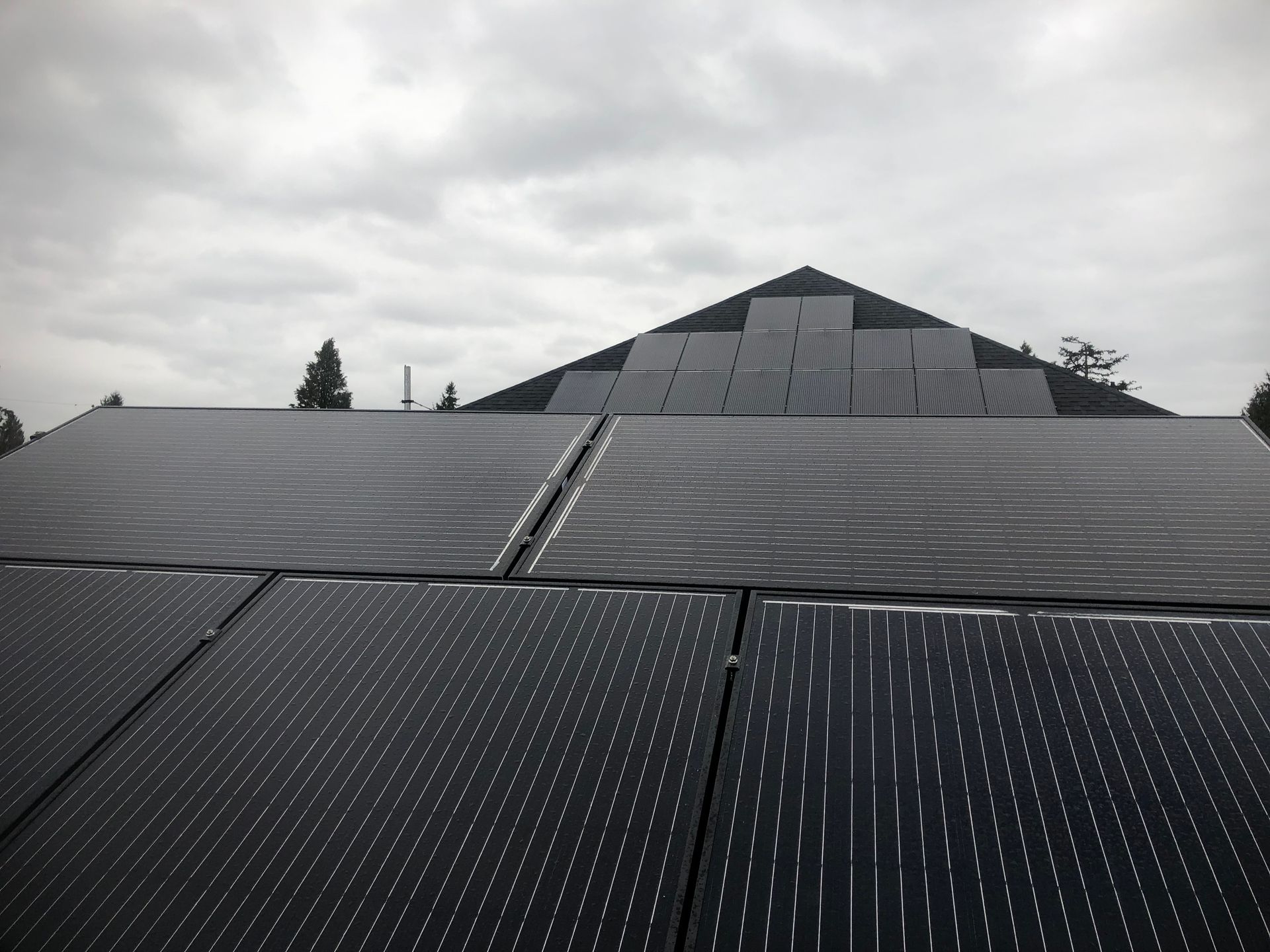
PSE Flex Batteries: Get Paid for Backup Power While Supporting Western Washington's Energy Grid
How Puget Sound Energy Homeowners Earn $1,000+ Through Battery Storage Incentives
A Tesla Powerwall installed in a Tacoma home provides backup power during winter storms, stores excess solar production during summer afternoons, and earns the homeowner $1,000 at enrollment plus up to $500 annually through Puget Sound Energy's Flex Batteries program. That's $3,500 in utility incentives over five years—on top of the 30% federal solar tax credit—for a system that maintains at least 20% battery capacity reserved exclusively for the homeowner's backup power needs.
For PSE customers in Pierce, King, and Snohomish counties evaluating home battery storage, the Flex Batteries program transforms what was already a strong reliability investment into a financially compelling utility partnership. The program pays homeowners to allow PSE limited, automated access to their battery systems during Flex events—periods of peak energy demand when the grid experiences stress from extreme weather or high usage.
This article explains exactly how PSE's Flex Batteries program works, which battery systems qualify for incentives, what enhanced incentives reduce upfront installation costs by up to $10,000 for eligible homeowners, and why Sun's Eye Solar's certification as a PSE Recommended Energy Professional positions us to manage the entire process—from system design and equipment selection through interconnection approval and Flex enrollment.
Table of Contents
1. What Is PSE's Flex Batteries Program?
2. How Flex Batteries Incentives Work: The Numbers
3. Enhanced Incentives: Up to $10,000 Off Upfront Costs
4. Which Battery Systems Qualify for PSE Flex?
5. What Happens During a Flex Event?
6. How Flex Batteries Work With Solar Systems
7. The Sun's Eye Solar Installation Process
8. Common Questions Homeowners Ask About Flex Batteries
9. Next Steps: Get a Flex Battery Quote
What Is PSE's Flex Batteries Program?
PSE's Flex Batteries program is a demand response initiative that compensates residential customers for allowing Puget Sound Energy to access their home battery storage systems during periods of peak energy demand. Rather than activating expensive, carbon-intensive backup generators during extreme weather events or grid stress, PSE draws on distributed battery capacity from enrolled homeowners across the service territory.
How Demand Response Works
Western Washington's energy demand spikes during specific, predictable conditions:
- Winter cold snaps (November–March) when electric heating systems and heat pumps run continuously during sustained sub-freezing temperatures
- Summer heat waves (May–September) when air conditioning usage surges during multi-day periods above 85°F
- Evening peak hours (typically 5–9 PM) when people return home, cook dinner, and run appliances while solar production declines
- Renewable energy gaps when wind and solar generation drop below forecasted levels, requiring grid operators to compensate quickly
During these Flex events, PSE sends automated signals to enrolled battery systems, directing them to discharge stored energy to the grid. Homeowners take no manual action—the battery system responds automatically while maintaining a 20% minimum reserve exclusively for backup power.
Flex Event Parameters
PSE operates Flex events within specific constraints designed to protect homeowner backup power while maximizing grid benefit:
- Frequency: Maximum 30 events per season (summer and winter), up to 60 total events per year
- Duration: Typically 2–4 hours per event
- Timing: Events occur between 7 AM and 10 PM only, never on major holidays
- Limits: No more than 3 events per week
- Battery protection: Systems never discharge below 20% capacity
This structure ensures homeowners maintain backup power capability year-round while PSE gains access to distributed energy resources that reduce reliance on fossil fuel peaker plants and support Washington's clean energy transition under CETA (Clean Energy Transformation Act) requirements.
How Flex Batteries Incentives Work: The Numbers
PSE provides two distinct incentive streams for Flex Batteries participants: a one-time enrollment payment and annual participation rewards. Both are paid directly to the homeowner (the PSE account holder who owns the battery system).
Standard Flex Batteries Incentive Structure
Enrollment Incentive
- $75 per kWh of battery storage capacity (up to $1,000 maximum per battery)
- Paid as a check within 4–6 weeks after enrollment and W-9 submission
- One-time payment per battery (available for original installation only)
- Example: A 13.5 kWh Tesla Powerwall qualifies for $1,000 (13.5 kWh × $75 = $1,012.50, capped at $1,000)
Annual Participation Incentive
- Up to $500 per battery, per year for active participation
- Calculated as $0.50 per kWh discharged during Flex events
- Paid as a check at the end of each season (summer and winter)
- Performance tracked through the FlexSaver portal (managed by Uplight on behalf of PSE)
- Guaranteed through at least 2029, with potential program extension
Five-Year Incentive Example: Single Tesla Powerwall
| Year | Incentive Type | Payment Amount |
|---|---|---|
| Year 1 | Enrollment incentive | $1,000 |
| Years 2–5 | Annual participation (each year) | $500 × 4 = $2,000 |
| Total (5 years) | $3,000 |
Note: Homeowners with multiple batteries earn incentives per battery. A home with 3 Tesla Powerwalls earns $3,000 at enrollment plus up to $1,500 annually.
Tax Considerations
PSE Flex Batteries incentives are considered taxable income. Uplight (the program administrator) collects W-9 forms from all participants before processing incentive payments and issues 1099 forms in January for the previous tax year. Homeowners should consult tax advisors to understand how these payments affect their specific tax situations.
Enhanced Incentives: Up to $10,000 Off Upfront Costs
Beyond the standard Flex Batteries incentives, PSE offers enhanced upfront incentives that reduce the initial equipment and installation costs of battery systems for eligible homeowners. These enhanced incentives are designed to increase equitable access to battery storage technology and address specific grid reliability challenges in certain service areas.
Pathway A: Income-Qualified and Equity-Focused Incentives
Homeowners may qualify for Pathway A enhanced incentives based on factors including:
• Limited income (household income below county-specific thresholds)
• Current enrollment in PSE's Bill Discount Program
• Lack of access to healthcare or food resources
• Linguistic or social isolation
• Disability status
Pathway A Benefits:
• Up to $10,000 in enhanced incentives toward equipment and installation costs
• Or 100% coverage of eligible equipment and installation costs (whichever is less)
• Applied as an upfront discount through your installer (PSE reimburses the contractor directly)
• In addition to standard Flex Batteries enrollment and participation incentives
Pathway B: Grid Reliability-Focused Incentives
Homeowners experiencing reliability concerns and living in specific areas of PSE's grid (identified by PSE based on infrastructure analysis) may qualify for Pathway B enhanced incentives.
Pathway B Benefits:
• Up to $5,000 in enhanced incentives toward equipment and installation costs
• Or 100% coverage of eligible equipment and installation costs (whichever is less)
• In addition to standard Flex Batteries enrollment and participation incentives
How Enhanced Incentives Work
Enhanced incentives are applied during the installation process through PSE Recommended Energy Professionals (like Sun's Eye Solar). The workflow:
• Step 1: Your installer checks your eligibility for enhanced incentives using PSE's qualification tools
• Step 2: Installer submits application and eligibility documentation to PSE on your behalf
• Step 3: PSE approves the application and confirms incentive amount
• Step 4: You receive the enhanced incentive as a reduced upfront cost on your final invoice
• Step 5: PSE reimburses the installer directly
This structure means eligible homeowners see the benefit immediately as a lower purchase price, not as a rebate check months after installation.
Combined Incentive Example: Pathway A Homeowner
Scenario: Income-qualified homeowner installing a 13.5 kWh Tesla Powerwall
• System cost: $18,000 (equipment + installation)
• Pathway A enhanced incentive: -$10,000 (applied at purchase)
• Federal solar tax credit (30%): -$2,400 (on net cost of $8,000)
• Net cost to homeowner: $5,600
• Plus: $1,000 Flex enrollment incentive (check within 4–6 weeks)
• Plus: Up to $500 annually for participation
Total benefit over 5 years: $10,000 (enhanced) + $2,400 (federal tax credit) + $1,000 (enrollment) + $2,000 (4 years participation) = $15,400 in combined incentives
Which Battery Systems Qualify for PSE Flex?
PSE maintains a qualified equipment list for Flex Batteries enrollment. Eligibility requires both technical compatibility (the battery system must communicate with PSE's grid management platform) and contractual agreements between PSE and manufacturers.
Currently Approved Battery Systems (As of February 2026)
Tesla Energy Storage
✓ Tesla Powerwall 2 (13.5 kWh usable capacity)
✓ Tesla Powerwall+ (13.5 kWh usable capacity)
✓ Tesla Powerwall 3 (13.5 kWh usable capacity)
✓ Scalable configurations (multiple units supported)
SolarEdge Energy Storage
✓ SolarEdge Energy Bank (various capacity configurations)
✓ Compatible with SolarEdge solar inverter systems
✓ Modular expansion capabilities
Franklin Energy Storage
✓ Franklin Home Power (FHP) battery systems
✓ Whole-home backup configurations
Enphase Energy Storage
✓ Enphase IQ Battery systems
✓ Modular design for flexible capacity sizing
Technical Requirements for Participation
Beyond equipment compatibility, homes must meet specific technical criteria:
- Advanced Metering Infrastructure (AMI): Your home must be equipped with PSE's AMI "smart meter" that provides 15-minute interval data and two-way communication. Most PSE customers already have AMI meters installed
- Valid interconnection agreement: The battery system must be interconnected to PSE's grid through PSE's standard interconnection process (Sun's Eye Solar manages this process for all installations)
- Residential electric account: Must be a PSE residential customer on rate schedules 24 or 25
- No conflicting demand response programs: Cannot be enrolled in other third-party demand response programs simultaneously
What Happens During a Flex Event?
Flex events are completely automated from the homeowner's perspective. Understanding what happens provides confidence that backup power remains available while your battery supports grid stability.
The Flex Event Timeline
1. Event Prediction (8 AM–12 PM, Day Before or Day Of)
PSE's energy forecasting systems predict high-demand periods based on weather forecasts, historical usage patterns, and renewable energy generation projections. Once a Flex event is confirmed, PSE sends notifications to all enrolled customers via email (optionally via text for some programs).
2. Battery System Receives Signal (Event Start Time)
At the event start time (between 7 AM and 10 PM), PSE's platform sends automated signals to enrolled battery systems directing them to begin discharging. The battery management system responds without any homeowner action required.
3. Battery Discharges to Grid (2–4 Hour Duration)
The battery discharges stored energy to the grid while simultaneously powering your home if you're consuming electricity. The system maintains a minimum 20% state of charge (SOC) reserved exclusively for backup power. This means:
• A 13.5 kWh Powerwall reserves 2.7 kWh for backup power
• If the grid fails during a Flex event, your battery immediately switches to backup mode using the reserved capacity
• Your critical loads remain powered even during simultaneous Flex events and outages
4. Event Conclusion and Recharge
When the Flex event ends, the battery stops discharging to the grid and resumes normal operation. For solar-connected systems, the battery recharges from excess solar production. For storage-only systems, the battery can recharge from grid electricity during off-peak hours if configured for time-of-use optimization.
Common Questions Homeowners Ask About Flex Batteries
Q: Will my battery still work during a power outage if it's enrolled in Flex?
A: Yes. Your battery maintains a minimum 20% reserve capacity exclusively for backup power. During outages, the battery immediately switches to backup mode and provides power to your critical loads using this reserved capacity plus any charge above the 20% threshold.
Q: Can I opt out of individual Flex events?
A: Yes. You can adjust your participation settings through the FlexSaver portal or contact Uplight support at flex@pse.com or 1-888-793-9347 to opt out of specific events. However, consistent opt-outs may affect your annual participation incentive eligibility.
Q: Do I need solar panels to participate in Flex Batteries?
A: No. Both solar-connected battery systems and storage-only (standalone) battery systems qualify for Flex Batteries as long as they use approved equipment and are properly interconnected to PSE's grid.
Q: How do I know if I qualify for enhanced incentives?
A: Sun's Eye Solar checks eligibility during the initial consultation using PSE's qualification tools. We verify income thresholds, Bill Discount Program enrollment, and grid reliability area status to determine which enhanced incentive pathway (if any) applies to your situation.
Q: What happens to the incentives I earn if I move?
A: The battery system and Flex enrollment transfer with the property. The new homeowner becomes eligible for ongoing participation incentives as long as they maintain the PSE electric account and keep the battery enrolled. The original enrollment incentive was a one-time payment to the original purchaser.
Q: Can I combine Flex Batteries incentives with the federal solar tax credit?
A: Yes. Battery storage systems paired with solar installations qualify for the 30% federal Residential Clean Energy Credit (through 2032). PSE Flex incentives do not reduce the federal tax credit basis. However, consult your tax advisor for specific guidance on how utility incentives interact with federal credits.
External Citations and Resources
This article references the following authoritative sources:
• PSE Flex Batteries Program Overview
• PSE Flex Batteries Enhanced Incentives
• Washington Clean Energy Transformation Act (CETA)
• Federal Residential Clean Energy Credit — IRS
Next Steps: Get a Flex Battery Quote from Sun's Eye Solar
If you're a PSE customer in Pierce, King, or Snohomish County considering home battery storage for backup power, energy independence, or utility bill reduction, Sun's Eye Solar provides comprehensive Flex Battery installation services as a PSE Recommended Energy Professional.
Our Flex Battery installation process includes:
✓ Enhanced incentive eligibility verification (Pathway A and Pathway B qualification)
✓ Battery system sizing based on your backup power priorities and energy usage patterns
✓ Equipment selection from PSE-approved manufacturers (Tesla, SolarEdge, Franklin, Enphase)
✓ Complete permitting and PSE interconnection application management
✓ Professional installation by NABCEP-certified technicians
✓ Flex Batteries enrollment coordination with Uplight/PSE
✓ Federal tax credit documentation support
✓ 10-year workmanship warranty on all installations
Sun's Eye Solar specializes in advanced residential energy systems: solar, battery storage, smart panels, and EV charging infrastructure. We design with Washington's climate and utility programs in mind, ensuring your battery system qualifies for maximum incentives while delivering reliable backup power when you need it most.
Ready to explore battery storage with PSE Flex incentives?
Contact Sun's Eye Solar to schedule a Flex Battery consultation. We'll assess your home's electrical service, review your backup power priorities, verify enhanced incentive eligibility, and provide transparent pricing showing exactly how PSE Flex incentives and federal tax credits reduce your total investment.